
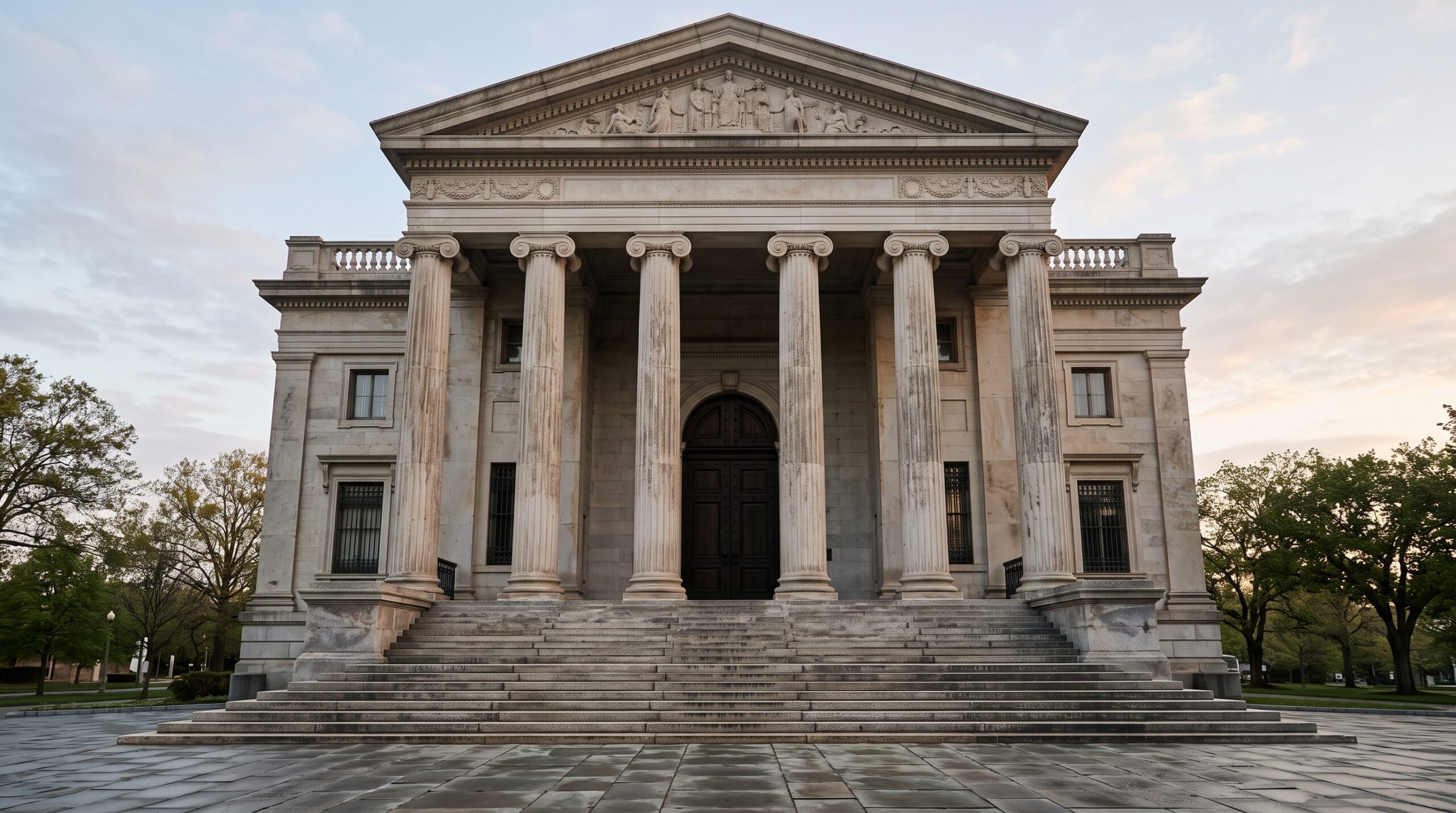
Most of us exercise rights every week without naming the lawsuit that helped secure them. You expect a fairer process if you are questioned by police. You expect schools not to sort children by race. You expect a lawyer when liberty is at stake and the state holds the power. Those expectations did not appear fully formed. They were argued, decided, limited, and expanded in courtrooms over time.
Landmark court cases that changed everyday rights turned private disputes into public rules. Some rulings are celebrated; others remain debated. All of them show how constitutional text and statutes gain meaning through real facts. This article highlights several U.S. cases that still shape ordinary life, written as general civic education—not legal advice for your situation. Other countries have their own landmark histories; local law always controls.
Why Court Decisions Reach Into Daily Life
Constitutions speak in broad phrases: equal protection, due process, free speech, unreasonable searches. Legislatures pass statutes. Courts resolve conflicts when government action, private claims, and individual liberty collide. A single plaintiff’s story can set a precedent that police departments, schools, employers, and families must account for for decades.
Everyday rights are practical. Can the state force you to face serious charges without counsel? Can officials search first and justify later? Can a law treat people differently without a legitimate basis under governing constitutional tests? Landmark cases answer those questions in ways that filter into training manuals, school policies, and the warnings you hear on television dramas.
Expert Insight From Civic Literacy
People often remember the slogan of a case and forget its limits. Holdings are tied to facts and later narrowed or extended. Reading a case as a permanent blank check is as misleading as pretending courts never change ordinary life.
Fair Process and the Right to Counsel
Gideon v. Wainwright (1963) stands for a simple proposition that reshaped criminal justice: when you face serious criminal charges and cannot afford a lawyer, the state must generally provide counsel under the Sixth and Fourteenth Amendments in the U.S. system. The decision grew from a handwritten petition and a recognition that trials without lawyers are often theater, not fairness.
Before Gideon, the promise of a fair trial depended heavily on wealth for many felony defendants in state courts. Afterward, public defense systems—however underfunded in practice—became a structural expectation. If you ever sit in a courtroom, the presence of appointed counsel for those who qualify is part of that legacy. Quality and caseloads remain live policy fights; the constitutional baseline remains.
Hypothetical Without Counsel
Imagine facing a felony charge alone against a trained prosecutor, unsure when to object or how to cross-examine. Gideon does not guarantee victory. It aims to guarantee a chance at a fair fight.
Police Questioning and the Famous Warnings
Miranda v. Arizona (1966) required that, before custodial interrogation, police advise suspects of rights including silence and counsel. Those warnings entered popular culture so completely that many people can recite a version from memory. The Court’s concern was coercion inherent in station-house questioning without procedural safeguards.
Miranda does not mean police can never ask questions. It does not erase every statement in every context. It ties the admissibility of certain confessions to warnings and waiver in custodial settings, subject to later case law exceptions and refinements. For everyday rights, the practical effect is that interrogation is bounded by known rules—and that “you have the right to remain silent” is more than a script.
Limits Worth Remembering
Not every police conversation is “custody.” Not every roadside exchange triggers the same rules. The landmark status of Miranda coexists with a thick body of follow-on decisions. Rights are strongest when you understand both the protection and its edges.
Equality in Schools and Private Life
Brown v. Board of Education (1954) rejected racial segregation in public schools under the Equal Protection Clause, holding that “separate but equal” had no place in public education. The ruling attacked a legal architecture that shaped where children learned and what the law said about dignity and status. Implementation took years of further litigation and political struggle; the principle redirected American education law.
Loving v. Virginia (1967) struck down laws barring interracial marriage, affirming that the freedom to marry a person of another race could not be denied on that basis under constitutional equal protection and due process principles. What sounds obvious to many readers now was once criminalized in multiple states. Everyday family life—who can marry whom under state law—was rewritten by that decision.
Equality as an Ongoing Project
Landmark equality cases open doors; statutes, institutions, and later cases keep testing how wide those doors stay. Everyday rights in this area include both formal legal equality and the practical ability to use schools, housing, and public life without unlawful discrimination under current law.
Privacy, Searches, and the Home
Katz v. United States (1967) reframed Fourth Amendment search doctrine around reasonable expectations of privacy, not only physical trespass. Listening devices on a phone booth triggered constitutional scrutiny. The shift matters in a world of electronic communications: what government must do before intruding on private conversations became a privacy-centered question.
Later technology cases continue that struggle—cell phones, location data, digital papers. The everyday right is not absolute secrecy. It is a set of rules requiring warrants or valid exceptions before many intrusive searches, rooted in a tradition that the home and private communications are not open season. Knowing you can ask whether a warrant exists is part of civic practicality.
Hypothetical Digital Parallel
You expect that private communications are not casually intercepted without legal process. Katz helped move the law toward protecting people, not only places—an idea that still frames debates about modern surveillance tools.
Speech, Press, and the Public’s Ability to Know
Free-expression landmarks—across defamation rules, prior restraint fights, and student-speech cases—shape what you may say about public officials, what journalists can publish, and how schools regulate student expression. Precise holdings differ, but the shared theme is skepticism of government punishment for speech, especially about public matters, subject to historically recognized limits such as true threats or certain unprotected categories defined by case law.
For everyday rights, that tradition affects online criticism, peaceful protest permitting disputes, and the press’s role in exposing official action. Speech conflicts remain among the most visible legal arguments in democratic societies because everyone holds an opinion and governments hold power.
Balancing Acts
Speech rights coexist with defamation law, privacy claims, and time-place-manner rules for protests. Landmark protection is robust; it is not a promise that every statement is consequence-free in civil court or that every location may be occupied without regulation.
How to Read Any “Landmark” Without Mythmaking
Ask what question the Court actually decided. Ask what facts limited the holding. Ask what later cases did with the rule. Everyday rights are safest when understood as living doctrines administered by institutions—police training, school boards, legislatures—not as slogans disconnected from procedure.
If a dispute touches your liberty, housing, or livelihood, landmark cases provide orientation. They do not replace counsel. Statutes of limitation, local ordinances, and factual records decide real outcomes. Civic knowledge helps you ask better questions; a licensed attorney applies the law to your facts.
Compact Civic Checklist

What right is asserted? Who is the state actor? What precedent is cited? What exceptions apply? What remedy is possible? Those five questions turn news about courts into usable understanding.
FAQ
What makes a court case “landmark”?
Usually a decision that significantly changes legal doctrine or practical government behavior in a way that affects many people beyond the parties.
Do these U.S. cases apply worldwide?
No. They bind within their legal system. Other countries develop rights through their own constitutions and courts.
Can landmark cases be overturned?
Yes. Later courts can narrow or overrule precedent, and legislatures can change statutes within constitutional limits.
Why should non-lawyers care?
Because police encounters, schools, marriage rules, and privacy expectations are shaped by these doctrines.
Where should I start if I have a real legal problem?
Document facts and deadlines, then consult a licensed attorney in your jurisdiction. Landmark history is context, not a filing strategy.
Is this legal advice?
No. It is public education about historical cases and themes.
Precedent Becomes Personal When You Need It
Landmark court cases that changed everyday rights did so by turning individual conflicts into rules about counsel, interrogation, equality, privacy, and speech. You benefit from them when processes are fairer and when government power meets procedural brakes. You still bear responsibility to know that rights have limits and that facts matter.
Pick one case from this list and read a reliable summary from a court or educational institution this week. Notice the facts, the holding, and the limits. Everyday rights grow stronger when ordinary people understand them—not as mythology, but as hard-won, still-contested law.
Blog
This section provides an overview of the blog, showcasing a variety of articles, insights, and resources to inform and inspire readers.
-

Protection Against Dismissal in Germany | How the Kündigungsschutzgesetz Works
You receive a termination letter and immediately wonder whether the employer can simply end the…
-

Employment Contracts in Germany | Key Rights, Probation Periods, and Fixed-Term Rules
You receive a job offer in Germany and the contract arrives. The language is formal.…
-

Germany’s Minimum Wage in 2026 | €13.90 per Hour and What It Means for Workers and Employers
Your payslip arrives and the hourly rate looks familiar—until you check the calendar. Since 1…

Discover Our Products and Offers
This section introduces our shop, showcasing products and special deals to enhance your shopping experience.

Product One
$9.99
Category One

Product Two
$19.99
Category Two

Product Three
$29.99
Category Four
Leave a Reply